Η Θουκυδίδεια προσέγγιση
Περίληψη
Αυτό το δοκίμιο απαντά στο ερώτημα: Τι εμποδίζει την ελληνο-ισραηλινή συνεργασία να εξελιχθεί σε μια διαρκή στρατηγική συμμαχία, παρά τη διαρθρωτική σύγκλιση στη Νοτιοανατολική Μεσόγειο;
Σελίδα υπό διαμόρφωσιν
Οι προοπτικές στρατηγικής ευθυγράμμισης μεταξύ Ελλάδας και Ισραήλ μπορούν να εξεταστούν μέσω της θουκυδίδειας τριάδας των συμφερόντων, του φόβου και της τιμής, που λειτουργεί στο πλαίσιο του κοινού γεωπολιτικού συμπλέγματος της Νοτιοανατολικής Μεσογείου. Η σύγκλιση συμφερόντων και αντιλήψεων για τις απειλές μεταξύ των δύο κρατών είναι πραγματική και έχει δομικά θεμέλια. Τα όρια της ευθυγράμμισης εμφανίζονται αλλού. Στο επίπεδο των συμφερόντων, η Ελλάδα και το Ισραήλ λειτουργούν ως υποσυστήματα εντός του ίδιου στρατηγικού περιβάλλοντος. Η ενεργειακή ασφάλεια, η θαλάσσια γεωγραφία και έργα όπως το EastMed και το IMEC στηρίζουν τη συνεργασία σε μακροπρόθεσμους υλικούς υπολογισμούς, ενώ η Κύπρος λειτουργεί ως γεωγραφικός και στρατηγικός σύνδεσμος μεταξύ των θαλάσσιων ζωνών. Ο φόβος συγκλίνει γύρω από την Τουρκία ως αποσταθεροποιητικό, ρεβιζιονιστικό παράγοντα. Η Ελλάδα αντιμετωπίζει άμεση στρατιωτική και πολιτική πίεση, ενώ το Ισραήλ προβλέπει μακροπρόθεσμους περιορισμούς που συνδέονται με την περιφερειακή κυριαρχία, ιδίως στη Συρία μετά τον Άσαντ. Η πηγή της ανασφάλειας είναι κοινή, ακόμη και αν η αμεσότητά της διαφέρει. Η κύρια διαφορά έγκειται στην Τιμή και τη θεσμοθέτησή της. Το Ισραήλ έχει ενσωματώσει την Τιμή σε μια κουλτούρα ασφάλειας που επικεντρώνεται στη στρατηγική αυτονομία και την αξιόπιστη αποτροπή. Η Ελλάδα έχει ιστορικά αποδυναμώσει την Τιμή σε διαδικαστική νομιμότητα μέσω της εξάρτησης από εξωτερικές εγγυήσεις, με αποτέλεσμα την αντιδραστική και όχι την προληπτική αποτροπή. Μια στρατηγική ευθυγράμμιση μεταξύ Ελλάδας και Ισραήλ είναι επομένως πιθανή, αλλά ατελής. Η υλοποίησή της εξαρτάται λιγότερο από εξωτερικές απειλές και περισσότερο από εσωτερικές μετασχηματισμούς —ιδίως εντός της Ελλάδας— σχετικά με τη λανθάνουσα δύναμη, τη στρατηγική κουλτούρα και τη διαρκή αξιοπιστία της αποτροπής.
Εισαγωγή
The prospects of strategic alignment between Greece and Israel can be coherently understood through the Thucydidean triad of Interest, Fear, and Honour, operating within the shared geopolitical complex of the Southeastern Mediterranean. The convergence of interests and threats is real; the divergence lies primarily in internal capacity, strategic culture, and doctrine.
Συμφέρον: Ενέργεια, Γεωγραφία και Διαρθρωτική Σύγκλιση
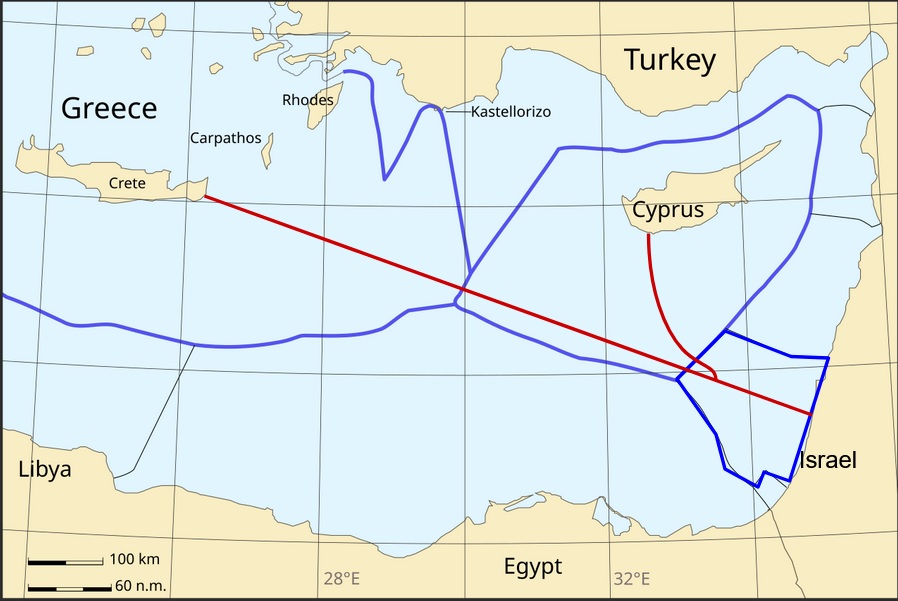
Greece and Israel are embedded within the same geopolitical complex of the Southeastern Mediterranean, with Cyprus functioning as a geographic and strategic connector through maritime zones and potential EEZ contiguity. The EastMed pipeline project, together with the IMEC mega-project, already demonstrates converging interests in the exploitation and protection of hydrocarbons — a strategic commodity of extremely low elasticity of demand and without immediately available substitutes. Energy security therefore constitutes a core national interest for both states, anchoring cooperation in material, long-term calculations rather than tactical convenience. At this level, Greece and Israel operate as subsystems within a shared strategic environment, rendering cooperation rational and structurally grounded.
Φόβος: Η Τουρκία ως Αποσταθεροποιητικός παράγων
The dominant destabilising actor in this system is Turkey, driven by a revisionist strategy seeking absolute gains through disruption of the balance in the Southeastern Mediterranean. Greece experiences this threat directly through explicit military and political pressure. Israel encounters it more indirectly, particularly in relation to the control of post-Assad Syria, yet clearly perceives the emergence of a regionally dominant Turkey as a long-term strategic risk. Fear thus operates asymmetrically but convergently: Greece confronts immediate coercion; Israel anticipates future constraint. In Thucydidean terms, both states respond to the same source of systemic insecurity, even if the form and intensity differ.
Τιμή: Status, κυριαρχία και Αξιοπιστία Αποτροπής
For Greece, Honour is closely tied to sovereignty, maritime rights, and resistance to imposed revision. For Israel, Honour manifests through strategic autonomy, regional credibility, and refusal to accept encirclement or subordination. In both cases, Honour constrains compromise and elevates the symbolic dimension of deterrence. Yet Honour also reveals asymmetry. Israel has embedded Honour within a security culture that accepts coercion and decisive action against adversaries as legitimate instruments. Greece, by contrast, has historically privileged external balancing and appeasement through participation in NATO and the European Union, diluting Honour into procedural legitimacy rather than credible deterrence.
Στρατηγικά μέσα: Ευθυγράμμιση υπό Όρους
While Interest and Fear converge, divergence emerges at the level of means. Israel has invested consistently in latent power — economic resilience, demographic prioritisation, and a security-oriented political culture — translating this into strong armed forces and a doctrine combining deterrence and coercion. Greece, relying heavily on EU membership and external guarantees grounded in international law, neglected latent power, weakening economic foundations, demographic vitality, and long-term military readiness. As a result, Israel approaches deterrence proactively, whereas Greece has managed deterrence failure reactively through escalation control and appeasement.
Prospects for Strategic Alignment
A strategic Greek–Israeli alignment is structurally plausible but not yet fully realised. Preconditions include: • prioritisation of a shared energy strategy linked to maritime zones, • strengthening of economic and latent power, particularly on the Greek side, • deeper diplomatic and military cooperation, including doctrinal exchange, • development of a joint deterrence framework extending from the Aegean to the Eastern Mediterranean, with recent acquisitions such as the Belharra frigates and Rafale fighters potentially consolidating deterrence in the Southeastern Mediterranean, • demonstrated political will to invoke and sustain deterrence.
Conclusion
In Thucydidean terms, Greece and Israel share Interest and Fear, but diverge in the institutionalisation and defence of Honour. This asymmetry currently prevents the relationship from maturing into a fully strategic alliance. The potential for convergence is real; its realisation depends less on external threats than on internal transformation—particularly within Greece—regarding latent power, strategic culture, and the credible use of force. Israel understands the limits of Greek commitment and calibrates its expectations accordingly, seeking no obligations beyond what Greece is demonstrably prepared to sustain.